VOL. 22, #4, Winter, 2004
Collecting Blue Diamonds, Forecasting Xmas '04, A Special Report on Burma, Notable Quotes, Gem Scam on Ebay Response, Collectors Corner, In The News
- Home
- Newsletter
- VOL. 22, #4, Winter, 2004

Collecting Blue Diamonds, Forecasting Xmas '04, A Special Report on Burma, Notable Quotes, Gem Scam on Ebay Response, Collectors Corner, In The News
Collecting Blue Diamonds
by Robert Genis
Blue diamonds are one of natures great rarities. They are considered a great prize in any connoisseur’s collection. In today’s market, there are more buyers than sellers for natural blue diamonds. It should be noted, few will ever match the color of a fine Burma or Kashmir sapphire. Despite this visual reality, the top stones are often priced like Renoirs or Picassos.
Country of Origin
India was the all time leading producer of large colored diamonds. These mines produced from 400 B.C. to 1725. Today, most new production of blues comes from South Africa and gray blues tend to be from Australia. India was the source for the blue diamond that later became the the infamous 45.52 Hope. Another famous blue, the 33.56 Wittelsbach showed up at a wedding in Europe in 1667. It is presently believed to be with a private collector in Germany.
The Hope
The most famous diamond in the world is the blue Hope Diamond. The diamond was first purchased by Jean Baptiste Tavernier at 112 carats. This diamond was from Golconda, India and was triangular in shape. Tavernier sold the diamond to King Louis XIV of France in 1668. In 1673, it was recut resulting in a 67 carat stone. The stone became known as the "Blue Diamond of the Crown" or the "French Blue”. It belonged to several generations of French kings until its disappearance during the French revolution in 1792. The stolen stone was recut again to disguise it and reappeared in 1830. The Diamond was sold by the heirs of King George IV of England due to financial problems. The next owner was Henry Philip Hope and the stone came to be known as the “Hope Diamond”. Bad luck was associated with the blue diamond when several of its owners came to tragic ends- death or bankruptcy. In 1974, it was removed from its setting and weighed 45.52 carats. It is classified as a type IIb diamond. The Hope phosphoresces a strong red color for a short period of time after exposure to short wave ultra-violet light. In 1988, the Gemological Institute of America graded the stone. They observed that the diamond shows evidence of wear. It has a remarkably strong phosphorescence and its clarity possesses a whitish graining. GIA graded the color as fancy dark grayish-blue.
Why are blues blue?
The main reasons for color in diamonds are the presence of natural irradiation, impure atoms or atomic structural defects. Blue is caused by the presence of boron. The new Australian diamonds are probably colored by trace elements of hydrogen which results in a blue-gray color.
GIA Colored Diamond Grading
Although all grading systems are subjective, many in the trade feel the GIA grading system is inadequate with too few categories for potentially millions of colors. The grading system also has wide ranges in color grades. For example, there are good fancy intense and bad fancy intense blues. The final price always depends on the stone itself. Always ask yourself, is it beautiful or not? Each stone is priced individually despite the paper. It is almost like pricing a Monet. Some are more desirable than others and you have to look with your own eyes to arrive at a price.
Supply Today
The bottom line with blue diamonds is there are simply not many goods. Blues are truly rare. No one has large hoarded inventories of the goods that they are keeping off the market. No one is holding back the rough- it simply does not exist. Major dealers are lucky to see 50 blue diamonds a year from light blues to vivids. Procuring the rough to create large blues is practically impossible. The production of blue diamonds as a whole is severely limited. It is an interesting market in that there is practically no new supply of goods. Prices are escalating and there are limited goods to purchase. So many new people are aware that colored diamonds are hot, that many jewelers and dealers want into the business which, in turn, puts more upward pressure on prices.
Current Market Conditions
The blue diamond market is always in strong hands. The market remains extremely stable since 1992 and prices have probably doubled in the last 12 years. The elite connoisseur market has always been hot and this has filtered to subcarat blues recently.
Prices
Prices are expensive for the high end stones. It is best to think of hundreds of thousands of dollars per carat when considering these rarities. A five carat fancy vivid starts at $500,000 per carat.
Blue prices up at least 15-20% this year.
Auction Prices
Many look to auction sales to determine price trends for colored diamonds. The leading price per carat public sale for a blue diamond occurred in 1995 at Christie’s. A 4.37 fancy deep blue diamond sold for about $2.4 million, or $569,000 per carat. The stone was reported to actually looked like a blue sapphire. Remember auctions are not always a good indicator of the market. Sometimes you get two collectors bidding against each other and the final price is unrealistic. Of course, many fancy colored diamonds sold at auction are often resold at much higher prices to connoisseurs.
Modifiers
Besides straight blues, blue diamonds sometimes occur with green and gray secondary colors. Green-blue is a very desirable color combination because these diamonds look like dark aquamarine. Together these colors are beautiful making green is a positive modifier. Often seen as a negative, gray-blue stones are excellent speculations for people who want a blue look without paying the price of a straight blue. Most gray-blues look bluer than many straight blues because the combination of colors gives them more tone/saturation.
Fancy Blue Grades
The most desirable colors are fancy blue, fancy intense blue and fancy vivid blue. Sometimes, fancy dark blues are available in the market and most are mined in India. They tend to be oversaturated and almost blue/black like an Australian sapphire. Fancy deep blues today are less valuable than the straight blues.
Summary
The fast growing group of collectors and jewelry buyers possess an insatiable appetite for fancy colored diamonds. Blue diamonds are considered one of the top colors, along with green, pink and red. Blue diamonds are a unique asset because they offer fascinating beauty, concentrated wealth and resistance to downward price performance.
Forecasting Xmas '04
by Robert Genis
It is difficult to know exactly how xmas season was for colored stone dealers until late January. This is due to the reality that many goods are out “working” on memo and many sales occur in late December.
Nevertheless, we thought we would try to get a quick look in early December and interview a few major wholesale gem dealers regarding their xmas sales. Here is the consensus at press time.
Presidential Election
Many gem dealers noticed as soon as the presidential election was over business improved. Americans were preoccupied with the election and when it was over their focus changed to spending money.
Thanksgiving Day Weekend
Dealers expected a great deal of calls after Thanksgiving Day weekend. As a general rule, retail stores will call wholesalers after shoppers come into their stores over the weekend and want large important
colored gemstones. The calls did not come in and the major colored gemstone dealer firms were quiet.
Hard Asset Comeback
Some dealers mentioned it is probably time for investment gemstone firms to return to the market. Of course, cycle indicators show the most powerful price appreciation recently has been in commodities. In the last major bull market, colored gemstones were the last hard asset to rise in price. Interestingly, they were the last to fall in price so collectors/investors should have warning this time. Price appreciation is occurring with in gold, diamonds, real estate and rare coins. The declining dollar usually means rising colored gemstones prices. What the market really needs are large investors or collectors to enter the market. The last boom times were when investment firms dominated the gemstone market.
Improving Economy
Most hoped this xmas season will be better than last year and the improving economy is the reason. Consumer spending, jobs and factory orders are up and these are positive indicators of a recovering economy. The rising stock market is also positive sign for the gemstone market. When stock portfolios are rising, people tend to buy more high end gemstones. The two economic negatives are the ballooning deficit and the declining dollar. The declining dollar means gemstones will cost more overseas and these higher prices will eventually reflected in the prices of new gemstones.
Jewelers Not Buying
It is still conservative out there. Years ago jewelers used to speculate during xmas. They would make a piece and count on selling it for xmas. Now, they are only creating pieces by responding to specific requests from consumers. Jewelers today are selling from their own inventories and only buying after they have already sold something.
Changing Strategies
In years past, wholesalers sent all their goods to retailers for xmas. When someone called they didn’t have any goods in their possession. This year, many decided to hold most of their goods back and respond to calls. Hopefully, this will be more efficient and result in higher xmas sales.
Phantom Rock
Many dealers have calls for the same item and are chasing the same gemstone. A jeweler will call a few dealers looking for the same stone leaving everyone chasing the phantom rock.
High End Demand
What was in demand this year? The most predominant call is for 4 carat rubies or larger. Of course, these stones are practically nonexistent anyway. Blue sapphires were the number one seller this year because they are more moderately priced compared to ruby and emerald. There has been weak demand for star rubies or Kashmir sapphires. This might also be because the supply of these stones are so scarce.
Hot Stones
What stones are hot this year? There was not one hot stone that has created a buzz this year. The traditional stones such as colored diamonds, rubies, blue sapphires, untreated Colombian emeralds and spinels were in demand. Also, consumers wanted yellow sapphires, pink sapphires, rubellites and spessartite garnets. Spessartite is a gemstone that has tripled in price over the last few years and this rising price has not slowed down the demand at all. Additionally, it was reported tanzanite sales were slow.
Conclusion
In summary, xmas season will be down a little from last year. Dealers are not bragging. However, many private collectors get large xmas bonus checks and many hope to do more business in early January. That is what the industry is hoping for, and needs, in ‘05.
A Special Report on Burma
This is from a major gem dealer who visits Burma regularly. Due to the sensitivity of the situation, he wishes to remain anonymous. Thanks for inside information. ED.
I read your last Forecaster and have a few things to add. Regarding the sanctions/effect, I'll add one point. While China and Thailand may have replaced the US market in terms of dollar volume, the mix is different. China doesn't import much in the way of textiles from Burma, as China has its own factories. Thus the only effect of the US sanctions was to put a hundred thousand poor Burmese women out of work.
Whatever small amounts of money the Burmese Government may have lost is more than made up for in new China contracts and Thai loans. US politicians either couldn't care less, or are incapable of understanding the ramifications of their knee-jerk actions. No doubt the latest leadership changes in Burma will lead the US to adopt "more of the same" with regard to policy. It seems to have gone unnoticed that years of US acts have only enhanced the position of the hardliners, so that today the most repressive folks in the country have full reign. Apparently there is no "Plan B". When all is said and done, if ever, the US will be able to expect as many waving flags and rose petals in Burma as they got in Iraq.
Burma is now a wholly owned subsidiary of the People's Republic of China (PRC). No doubt the PRC is just waiting for the ink to dry on the "ancient" document proving Burma is really a renegade province of the Middle Kingdom. If needed, they will drum it out, and with no friends in the world, Burma can expect nary more than a whimper from the international community.
Even more so than the resentment of Burmese Government, the Burmese seem almost ready to take on Chinese. Private Chinese, who have bought Burmese ID cards, are taking greater and greater control over virtually all industries and commerce, and are also moving into the posh (a relative term, to be sure) areas of each city. Whole populations of poor folk are being displaced and moved into "new cities" on the edges of existing ones, as Chinese take land, build row houses and row shops, and completely alter the landscape. I got earfuls from cab drivers, trishaw drivers, laborers and gem merchants, who seem pretty incensed at the Chinese. While the population doesn't seem to have the chutzpah to stand up to the government, no matter what it does, I wouldn't be surprised to see ethnic tensions reach a boil.
As for governmental Chinese, every single thing they do is geared toward making Burma a part of the Motherland. If roads are built, they are to aimed at enhancing China's ability to move goods from Yunnan to southern ports and points west. The new Mandalay airport was built to Chinese military specifications. In Kachin State, public works are aimed east, enabling teak and other hardwoods, metals and industrial minerals, and jade to make its way into China. Kachin's once great forests are being used for chopsticks, cement pouring forms, and interior decoration in the PRC.
After the fall of Khin Nyunt (the ex prime minister), things were quiet, albeit tense. There had been a curfew prior to his arrest, but after his arrest it was lifted. Everyone associated with him and his business interests was running scared. Incidentally, the major mine owners of Mogok was a Khin Nyunt affiliate, so it will be interesting to see what happens with that. The man in the street was scared, expected the worst, but wasn't going to do anything about it. As one person told me, "we Burmese are cowards; we will never fight for our freedom." Sadly, after a decade visiting there, I have to agree. No Eastern European style people's revolt is likely to occur, ever.
As for gems, Mogok was closed down for a few weeks by government decree. Apparently there was concern that the water system is being polluted from all the mining and washing so that it is too silted up.
I don't know if two weeks will solve the problem, nor do I know if it is any worse than what the Chinese gold miners are doing to Kachin's water with their cyanide recovery techniques, but like many questions regarding Burma, this, too, will go unanswered.
There are some pretty good stones hitting the market, but prices are beyond reason. The driving force is not so much China as it is India.
India merchants who sell retail are paying up, and the Burmese don't mind waiting. Those of us dealing in the middle are effectively shut out, or else we have to buy and hold as speculators, hoping to sell down the line when foolishness gives way to absurdity (like the US housing market).
Notable Quotes
Telegraph.co.uk
November 18, 2004
“If rubies and emeralds could speak, what tales of passion and betrayal they would have to tell...Human beings have always expressed their love by gifts of jewelry, from the cheapest ring of coral to the vast chunks of ice lavished on Elizabeth Taylor by Richard Burton. Edward VII gave his mistress, Mrs. Keppel, a brooch of precious stones whose initial letters spelt out the word DEAREST: Diamond, Emerald, Amethyst, Ruby, Emerald, Sapphire and Tourmaline.”
Hindustan Times
The Sparkling World of Gems
October 28, 2004
Garima Pant
“Kings have coveted them, legends revolve around them. Epics like the film King Solomon's Mines have portrayed man's greed to possess them. Yes, we are talking about gemstones: emeralds, rubies, sapphires, diamonds.”
contactmusic.com
December 10, 2004
Ocean twelve co-star Brad Pitt to Catherine Zeta-Jones during the filming of the movie:
“Don't girls ever get bored with jewels?”
Catherine Zeta-Jones reply, “No.”
Gem Scam on Ebay Response
Last issue we wrote an article about gem scams on ebay. We were overwhelmed with response by our subscribers. Due to space considerations, only two can be printed, however, they are representative. The bottom line in buying gemstones on Ebay seems to be caveat emptor.
Dear Mr. Genis,
I just read the article in the Gemstone Forecaster regarding a recent eBay gem scam. While there are certainly dishonest and uniformed sellers on eBay, I have, through trial & error, and careful reading, been lucky enough to get some real bargains in gemstones on eBay. I have purchased beautiful kunzites from Afghanistan for less than $10 per carat, and spinels from Sri Lanka for less than $20 per carat. I do most of my buying from dealers overseas who also have legitimate gemstone businesses - i.e. they do not sell only on eBay. While it is difficult to find AAA goods of VS clarity on eBay, there actually ARE fine, genuine gemstones available on eBay for a good price, certainly well below dealer-to-dealer wholesale prices. I have never had a problem with any seller getting a refund, but I am also careful who I buy from, and I read the fine print.
Buying gemstones from any source, even from a jeweler, always carries an element of risk. Buyers would do well to educate themselves, read the feedback left by other buyers on each seller they are consider buying from, and buying only from sellers who include high resolution, unretouched, unenhanced digital images of the actual gemstones they are selling - NOT stock photos. One large company is known for their misrepresentation of gems and I hardly ever buy from them anymore. But there are a number of honest dealers from whom I regularly purchase beautiful spinel, fluorite, kunzite and other gems, and I have been completely satisfied with the genuineness of these gems. Of course, if you think you can get a flawless ruby or sapphire for $30, you are just plain ignorant. If you spend some time and are willing to take a small risk, you can get great deals. But as in any case, the watch phrase remains Caveat Emptor.
Sincerely,
Margaret Fex
Gemefex Fine Jewelry & Gems
California
Dear Gemstone Forecaster:
It is interesting to note that Ebay has selling policies on a number of items, but apparently has no specific policy for their "Jewelry & Watches" category which includes their listings for loose gemstones. A very recent experience shows that there are sellers on Ebay who are misrepresenting goods in violation of the FTC guidelines. A seller described an item as a "genuine gemstone" with a beginning price within the range of an expected low-end quality stone. Another Ebay member tipped me off that this seller was selling man-made stones. When I contacted the seller it was confirmed the stone was man-made but the seller insisted because the stone had the characteristics of a natural stone it was "genuine."
After sending the seller a message quoting from the FTC guidelines the transaction was very promptly canceled. At least two other Ebay members have let me know they complained to both Ebay and the FTC concerning the seller representing man-made stones as "genuine." I am sure that of the 42,963 items listed in the "Loose Gemstones" category of Ebay this morning there are both wonderful and fraudulent sellers represented. I have obtained some wonderful bargains through Ebay and have a few not-so-pleasant transactions to recall. The old adage 'Let the buyer beware' certainly applies.
Bill Bigham
North Carolina
Collectors Corner
Carmen Lucia Ruby
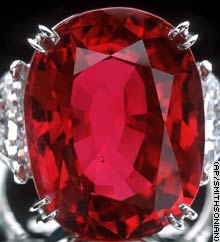
This may be why the stone was unknown until recently. The gem appears deep red and gives off pink flashes. The stone also windows and was probably cut this way to save weight. The gem is set in a platinum ring with diamonds. The jewel was obtained with funds donated to the museum by Dr. Peter Buck in memory of his Brazilian-born wife. Mrs. Buck was proud of having become an American citizen. After she died her husband, a cofounder of the Subway sandwich shop chain, decided to arrange for the museum to acquire the gem as a gift to the nation in her memory. The price of the stone is unknown.
Victoria’s Secret $10 Million Fantasy Bra
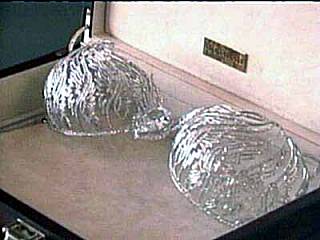
The latest fantasy gift is called the Heavenly "70" Fantasy Bra because it is adorned in the center with a 70-carat pear-shaped flawless diamond. The bra is composed of 2,900 pave-set diamonds, with a total carat weight of 112-carats. This bra is not the most expensive ever - Harry Winston created a $15-million version in 2000. However, it is the most labor intensive. It took more than 275 hours of to create the bejeweled bust-lifter. The bra is set in 18-karat white gold and was modeled by Tyra Banks.
Ozzy Robbed
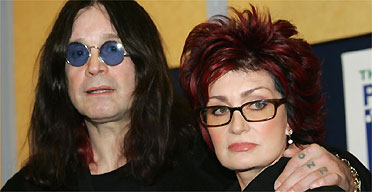
Burglars broke into the English country mansion of rocker Ozzy Osbourne in November and stole a large amount of jewelry. One of the burglars wore a ski mask and used a ladder to climb into the second-floor room of the mansion. One of the intruders jumped from a 30-foot-high, second-floor window after Ozzy tackled the burglar. Both burglars apparently escaped in a van, and the man who jumped was probably injured by the fall. Osbourne and his wife were staying at the mansion while she appears on the British TV talent show "The X-Factor."
Ozzy Osbourne and his wife Sharon offered about US $200,000 reward for the return of jewelry that was stolen during a break-in at their home.
Sharon Osbourne stressed the jewels had sentimental value which made them irreplaceable. The jewelry is valued at around US$4 million.
The items taken included Sharon Osbourne's wedding rings, which her husband bought her two years ago when they renewed their marriage vows.
Also lost was a ten-carat diamond ring worth $1.4 million. She lost a diamond daisy chain necklace, which was a 20-year anniversary gift from Osbourne, as well as two Franck Muller watches, both of which are collectors' pieces. A string of pearls with a diamond clasp worth $160,000, which she had for 20 years, was taken. A 4 inch x 4 inch $300,000 diamond rose ring was stolen. One of the most significant losses was a purportedly perfect 24 carat sapphire called the Swimming Pool worth $1.2 million.
She bought it a few years ago as an investment for her daughters. Sharon Osbourne said it was one of the cleanest sapphires in the world.
Frankel’s Diamonds Sold
The Gemstone Forecaster has written a great deal about Martin Frankel.
He was accused and convicted of embezzling at least $200 million from seven insurance companies in Arkansas, Mississippi, Oklahoma, Missouri and Tennessee that mostly sold funeral policies to the poor. Before disappearing, Frankel turned millions of dollars in embezzled investments into gold and diamonds. He was arrested in Germany after disappearing from his Connecticut mansion in 1999.
In December, 822 seized diamonds were sold for nearly $9 million during an auction. The proceeds are intended to provide restitution to the victims of his schemes. Hundreds of bidders gathered at the Jacob K.
Javits Convention Center for the two-day diamond auction held by the U.S. Treasury Department. The biggest diamond on sale was the 15.67 carat round brilliant diamond which sold for $297,500 to an Internet bidder. The other diamonds were mainly loose gems with a few rings and one pair of earrings.
Frankel, 50, has pleaded guilty to 24 counts of fraud and racketeering and was recently sentenced to 16 years in prison. Other Frankel assets have already been auctioned off, including included 21 cars and SUVs, a Harley-Davidson motorcycle, an airplane and two mansions.
Callas's Gems Fetch $1.8 Million
Maria Callas, known as “La Divina,'' had her jewels recently auctioned in Geneva by Sotheby’s for $1.8 million. The pre-sale estimate was about $1 million. Callas bequeathed the 11 pieces of jewelry to “a member of her circle'' before she died 27 years ago. Celebrity jewelry can fetch multiples of the underlying value. Buyers paid as much as 10 times the estimated value of jewelry owned by late tobacco heiress Doris Duke. Some Jacqueline Kennedy Onassis memorabilia has sold for 50 times its estimated worth. Callas's jewels didn't achieve such multiples.
The most expensive item was a marquise-shaped diamond ring weighing 11.7 carats. It sold for $397,246, compared with an estimate of $206,540. Callas gold evening bag by Van Cleef & Arpels sold for $45,439, compared with an estimate of $12,000. A ruby-and-diamond brooch by Van Cleef dating from 1967 took $144,578, compared with a valuation of $90,361. Callas, a daughter of Greek immigrants to the US, earned her fame and fortune portraying opera heroines. For a Chicago concert in 1957, she earned $10,000, an extraordinary amount for the time. Callas married Giovanni Battista Meneghini in 1949. He took charge of her career for 10 years as she performed in Milan, New York, Chicago and London, and adorned her with jewels. The marriage, and eventually her stage career, ended after Callas began seeing Greek shipping tycoon Aristotle Onassis, who left her and married President John F. Kennedy's widow in 1968. Callas died in Paris in 1977, leaving her family and friends to squabble over a fortune valued at as much as $12 million.
In The News
Rough Times
Changing demand has put gemstone supply in a crunch. The result: higher prices in the pipeline.
Ganoskin and Colored Stone
December 8, 2004
By Deborah Yonick
This is an excellent article on why gemstones prices will increase in 05. It was edited due to space limitations. ED
Historically speaking, gemstone mining has always been hit or miss.
When miners make a big strike, gemstones flood the market, prices fall, and smart dealers stock up, because inevitably the pocket will get mined out and prices will creep back up again. That rush of discovery, the thrill of seeing some new and amazing piece of nature coming onto the market, is one of the driving forces of the gemstone market. But lately, gemstone mines around the world have been missing more than they hit, according to gemstone cutters and wholesalers. For nearly two years, rough production worldwide has been soft, goods are harder to come by, and prices are rising in many gem categories.
"The last time we had a drought like this, it was 20 months with nothing new coming out. The current drought is running nearly two years," says gem cutter Steve Avery. "And, like a weather drought, there's no way to predict when it's going to end." Dealer Michael Nemeth, who often buys rough at the source, agrees: "This is the biggest lull in production in the past decade." The cyclical nature of gem mining in the last half century has seen different countries rise to prominence — Brazil in the 1950s and '60s, Tanzania in the '70s, Afghanistan in the '80s, and Nigeria in the late '90s, notes cutter and rough gem wholesaler Mark Kaufman. "We're definitely due for something new. Most of the gems in the world are produced in poor countries, and when families aren't farming, they're searching for something that will mean hard cash. Nigeria was dead for years, and then someone was digging a hole and bam, an alluvial deposit was discovered that started a gem rush. It will happen again, but who knows when."
In the past, when gem production was slow in one area, another was up, but that's not the current situation, reports gem wholesaler Jerry Romanella, "None of the typical gem-producing areas are hitting on all cylinders. People are still mining, but they're not producing excess quantities. There are no new pockets. My cutter in Bangkok says everything on the market is recycled. I haven't seen anything interesting for a while, just [picked-over] parcels for higher prices."
Production lulls are reported in many gems, including grossular mint green garnet, tsavorite, rhodolite, spinel, sapphire (particularly pink, but also yellow and blue), tanzanite, and even white topaz — with prices escalating. Some of the factors influencing the lulls have to do with issues at the source: lack of capital for exploration programs, sophisticated mining equipment to go deeper into the earth, and real processing plants for better recovery; bad weather and difficult terrain; political unrest; and soft economies.
In some cases — for example, the emerald mines of Colombia, the ruby mines of Mogok, Myanmar (formerly Burma), and the tanzanite mines in Tanzania — it's simply a case of old deposits not producing as much as they once did.
Discovery of new deposits is random because the prospecting itself is done haphazardly, with individuals sometimes literally stumbling over new finds. The gem trade is just starting to see the use of better equipment, trained personnel, and new technology in mining.
"Consortiums of venture capitalists are investing in small to intermediate operations," reports Gordon Austin, gemstone mining consultant and former director of the U.S. Bureau of Mines. "As long as gem mining is commercially viable with good returns, there will be capital available."
But the unpredictable nature of production makes it a hard sell for corporate investors. "I know of an iolite mine for sale, but it would cost about $100,000 to purchase and bring into operation," notes Austin. "This is far beyond the capabilities of local miners. [And in the world of publicly-owned mining companies,] who is willing to take the chance on mining material that runs from $400 to $20,000 per kilo, with the bulk in the $400 range?"
Political unrest can also hinder mining. Madagascar, which became one of the most important sapphire sources in the world with the discovery of a huge series of deposits in the mid-'90s, experienced a conflict two years ago that brought mining to a halt. "In 2002, big changes were happening in Madagascar," says dealer Tom Cushman, "There was a civil war, and the country had two presidents for six months. The old dictator put an embargo on all things up and down the highway to the port. Fuel prices hit $26 a gallon. Air France, which backed the old dictator, banned all flights. Nothing was coming in or going out. There was no one at the mines, and no buyers in the country. But since the new president came in July 2002, things stabilized."
Market Pressures
Aside from the logistics of mining, one of the biggest problems for gem miners is a shift in demand in the marketplace. Starting in the late 1990s and continuing into this decade, demand for high-quality gems has been increasing. The pressure on supply has only increased in the past two years as large gemstones have come into style. "I don't attribute [the shortage in large sizes] to less larger rough [coming out of the mines], but rather greater demand for what has always been a rare product," says dealer Eric Braunwart, "Larger rough may be what the individual cutters are buying. If so, the shortage would be caused by greatly increased demand and not less actual material. We're constantly telling our manufacturers to be more realistic in the volumes they request. Large orders for bigger sizes are pushing prices up, not bringing them down because of volume." American dealers are competing with dealers all over the world for the best gemstones — dealers who are often willing to pay a premium to get what they want. A prime example that American gem cutters cite are the German cutting and wholesaling firms of Idar-Oberstein, known internationally for dealing in the finest grades of gemstones.
Gem dealer Steve Ulatowski recalls that on his latest buying trip to Tanzania, both Thai and German dealers were bidding up the price of the most vibrant goods. "I made a deal on some spinel, and the next day I came back to complete the transaction, but the miners had sold the parcels to some German cutters for double the price. Four years ago, it was easy to buy rough, but the Germans are willing to pay prices the American cutters cannot afford."
Other dealers see the same trend with different gemstones. "The Germans are paying $40 a gram for pink tourmaline when it used to be one-sixth of that price," says Nemeth. "Two- to five-gram pieces are upwards of $200 a gram." The problem with demand that's focused on top-quality gemstones is that the best gems are only a tiny percentage of what's mined, and sometimes a mine will go for long periods without producing any fine material at all. No matter what is coming out of the ground, the miner's expenses are the same. If nobody is using the medium- or commercial-quality stones, the miner faces a real financial quandary — and that's exactly what's happening, say dealers. Austin tells of a friend who mines amethyst in Brazil and is thinking of closing his mine because he cannot market all of his production. "He can sell the very top-end material, but not the commercial- and mid-grade material. Now this, he believes, is an indication of the economy. The average buyer is not purchasing the “Wal-Mart” jewelry, so there is less demand for the low- to mid-grade material." "The low-end market [for gemstones] has dried up, and there's a cascade effect," agrees Kaufman. "If the miners aren't selling enough of the bread and butter, then they aren't able to mine, and that small percentage of top quality is nothing." So with demand for the best gemstones already at a fever pitch, some miners are stopping work because they can't pay the bills, adding to the supply crunch. The result is a steady increase in prices. One of the biggest increases has been in pink sapphire, which dealers say is going for two to three times what it did just a couple of years ago. Another major price hike has been in tanzanite, where rough prices have been quoted at $700 to $800 a gram. Kaufman says high-end tanzanite is scarce: "They're asking huge amounts for it or holding on to it. Instead of $300 a carat, it's $450 for the same goods. Either you come down on your margins, or your customers pay the difference."
To remain competitive, many cutters and dealers say they stock up. "I've always felt at the mercy of a hole in the ground," describes Avery. "So, I act like a squirrel and hoard all I can and live off my stock during difficult times. I've developed several credit lines to work with when I need it." And when supply is down for one gem, cutters promote another. "If I'm short on pink, I push red or blue-green," says Kaufman. But without increased supplies of rough hitting the market, it is only a matter of time before prices increase across the board.
"To survive, you must keep a good inventory, and unfortunately you must raise prices," says Ulatowski. "We've been spoiled by cheap facet rough. I don't think people realize how lucky they are to have rough, even in gems like blue topaz, amethyst, and citrine. People in the industry are going to have to start understanding and accepting that if they want facet-grade rough, they will have to pay extra for it. Once these higher prices are accepted on the market, mining activities will increase."
In addition to the ebb and flow of gems from the mines, wholesalers will have to contend with the changing nature of the market. "The world is getting smaller," Austin observes. "Gem miners in the past sat at the mines and waited for runners or buyers to come to them or to the nearby villages. Today, many of these same miners or their heirs simply jump on an airplane and fly to the cutting centers and sell their production. They get a much better price having cut out one, two, or three middlemen." Miners are becoming more educated and aware of global business practices rather than living hand-to-mouth, believes Austin. "The miners of tourmaline in Brazil have become much more refined and business oriented. [More and more] companies and individuals are not only mining rough, they're bringing it directly to the market — cutting the rough and selling finished stones, even making jewelry. The day of the Indiana Jones rough buyer/seller may be ending. It's becoming very difficult to take a handful of money to Africa or South America and double or triple it buying gem rough and selling it in the United States or the cutting centers. More operations are becoming integrated."
Braunwart believes the future of the trade lies in strategic alliances, especially with the people at the source. "If you build the right bridges with your suppliers, they will come to you first. Alliances between miners, suppliers, manufacturers, and retailers will be the norm." To that end, alliances between the industry and government agencies are bringing about improvements in producing countries. The Tanzanian government recently established an Export Processing Zone in Arusha that it intends to develop into a large mining, cutting, jewelry manufacturing, and trading center. It also is looking to simplify and lower taxes on rough gem goods to entice buyers and investors. Madagascar is moving in a similar direction. As part of a major undertaking to professionalize its trade, a new gemological institute will be established to provide gemology and lapidary arts education, and a research laboratory for certification. The project also calls for the creation of an export exchange and tracking system.
"If we can raise the level of professionalism, the market will be in the producing countries, instead of all the good material being exported to Asia and then sold into the world market," says Cushman.
"What that will do for the world as a whole remains to be seen. Probably the rising tide will float all boats and everybody will make more money."