Vol. 44, #2, Summer 2026
Special Auction Edition - Prices Soar
- Home
- Newsletter
- Vol. 44, #2, Summer 2026

Special Auction Edition - Prices Soar
Welcome to the Special Auction Edition of the Gemstone Forecaster. We occasionally analyze auction results if we think specific gems interest our subscribers. We thought it might be fascinating to take deep dive into the summer auction markets of 2026. Have economic uncertainties and geopolitical tensions stopped the high end gem market? After analyzing the results from Christie's, Bonhams and Sotheby's, our conclusion is absolutely not.
Some in the trade are complaining about wholesale prices lists. A well known service appears to have gone off the rails and many prices are way too low and others way too high. Perhaps monitoring auction prices is a more accurate gauge of high end prices, because the buyers and sellers are both knowledgeable parties-the epitome of true price discovery in the gem markets. We did not choose stones that sold for the most money like most media outlets do. We didn't want the entire newsletter to be about million dollar per carat colored diamonds. Instead, what you will find is our analysis of colored gemstones we find interesting. If you love fine gems and enjoy learning about various grading reports, you might enjoy this issue. Let's go.
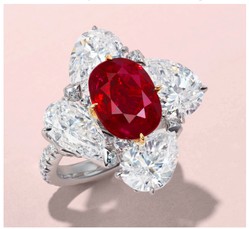
5.07 No-Heat Burma Ruby
 |
|
5.07 no heat Burma Ruby |
The 5.07 Burma ruby was accompanied by three grading reports- AGL, Gubelin and SSEF. Although we prefer the more informative full AGL Prestige Gemstone Reports, AGL stated the gem is Classic Burma, no evidence of heat, and no clarity enhancement. Looking at the lab measurements, the stone is really shallow with a depth percentage of 52% The low brilliancy is mitigated by its professional mounting.
It also came with SSEF, and of course, the often misused "pigeon blood" comment. Finally, a brand new Gubelin report concurred with AGL's red Burma grading call.
The reserve at Christie's for the rock was $1.2 million to $1.9 million. It sold for $2.32 million or slightly more than $457,000 per carat. This proves unheated gem red Burma rubies are super scarce and prices are strong.
6.94 Brazilian Paraiba Tourmaline
This 6.94 pear shaped Brazilian Tourmaline recently sold. The reserve was $153,000 to $229,000. It sold for slightly over $1.3 million or about $187,000 per carat. It was only graded by SSEF. The stone was graded as Brazilian and stated heat treatment is not detectable today in the Brazilian gems.
We like that straightforward statement. Hopefully, gem science will figure it out. What we dislike is there is no assessment of clarity enhancement. Would you spend over a million dollars on a stone without this determination? We wouldn't. The latest trend is to treat these stones in a fashion similar to emerald. Buyer beware with any Paraiba these days.
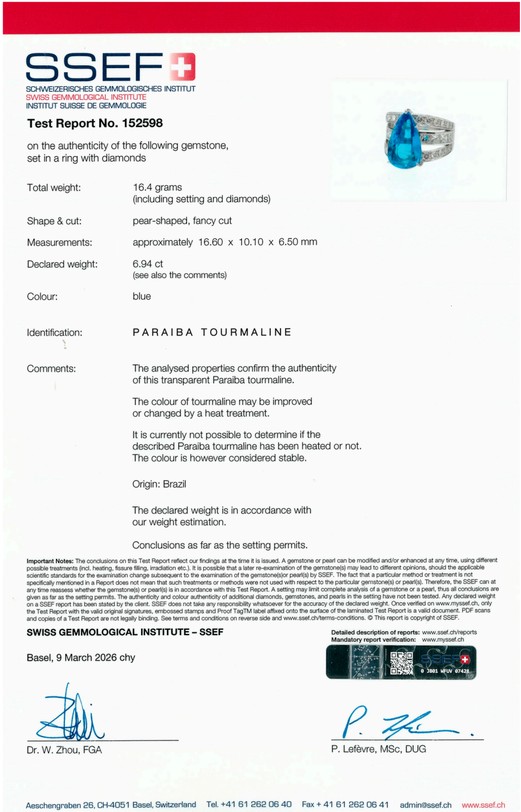 |
| Courtesy: SSEF |
3.50 Brazilian Paraiba Tourmaline
 |
|
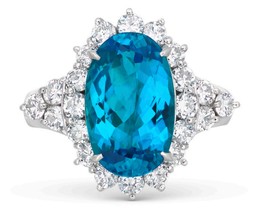
3.50 Brazilian Paraiba |
An oval 3.50 Brazilian Paraiba sold for about $583,500 total or $166,000 per carat. The stone was reserved between $82,000 and $121,000. Obviously this reserve was way too low, since it sold for 7X the low reserve. We are surprised the owner agreed unless they bought the stone a long time ago or they are a riverboat gambler.
SSEF stated they could not determine if the stone was heated, similar to the previous Paraiba grading report. They did state the gem is Brazilian. The Gubelin gemological report also stated the stone was Brazilian, with no indications of heating. Of course, neither lab looks to see if the stone is clarity filled or not. Again, this is a glaring error and makes us wonder if AGL was intentionally left out of this grading because the sellers didn't want to give clarity enhancement information to the buyer. Collectors should research both gems and labs thoroughly prior to significant acquisitions.
5.15 Burmese Pink Sapphire
 |
| 5.15 Burmese Pink Sapphire Courtesy: Christie's |
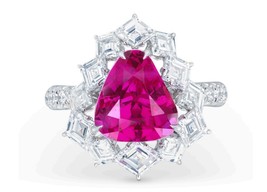
Another fascinating stone at auction was the 5.15 Triangular Burmese pink sapphire. It was reserved at $63,000 to $102,000. It sold for over $145,000 total or $28,000 per carat. SSEF stated the gem was Burmese with no indications of heating. Naturally, they didn't state whether the stone was clarity enhanced or not. Luckily for the buyer, the stone came with an AGL Prestige Gem Report. They called the stone Intense Pink Classic Burma. Also, AGL stated no heat and no clarity enhancement. The collector can be quite confident of what they got in this case.
12.43 No-Heat Burma Sapphire
 |
| 12.43 Burma Sapphire Courtesy: Christie's |
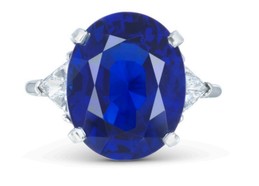
Christie's Magnificent Jewels also sold this 12.43 oval no heat Burma Sapphire. The low reserve was $230,000 and the high was $357,000. The final hammer price was slightly more than $555,000 or about $44,000 per carat.
It looks like a Lightly Included (LI) stone but is hard to really see because the stone is a bit dark. Again, we would prefer a full AGL prestige Report because it would assess the tone of the rock. Many think the darker blue sapphires are the best. Not really. The bluer the sapphire the better, not the darker. If the tone is too dark (90 at the AGL), often seen in Australian sapphires, the value plummets. Ideally, you are looking for a vivid blue with a lighter tone. The stone came with a SSEF and Gubelin. Both stated Burma no heat. The AGL Prestige Gem Report states Burma no heat. Thankfully for the new owner, AGL verified no clarity enhancement.
5.03 Classic no heat Burma
 |
| 5.03 Classic no heat Burma Ruby Courtesy: Bonhams |
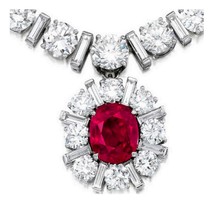
This exceptional Burma ruby and Diamond necklace sold for $2.178 million. The reserve was only $150,000-$200,000. It sold for 14X-20X the reserve. The stone was mounted in a diamond necklace totaling 39 carats The ruby was detachable and could be worn as a brooch, too. The stone came from a Denver collector.
Generally, we would simply divide the stone's carat weight by the sold price. This would put the stone at $433,000 per carat. However, we must deduct for the diamonds and the platinum craftsmanship. We would guesstimate $200,000 for the metal and diamonds. That makes the per carat price of the ruby about $393,000 per carat. This makes the average price of the two 5 carat Burma rubies recently sold at recent auctions at about $425,000 per carat. Sounds right to us.
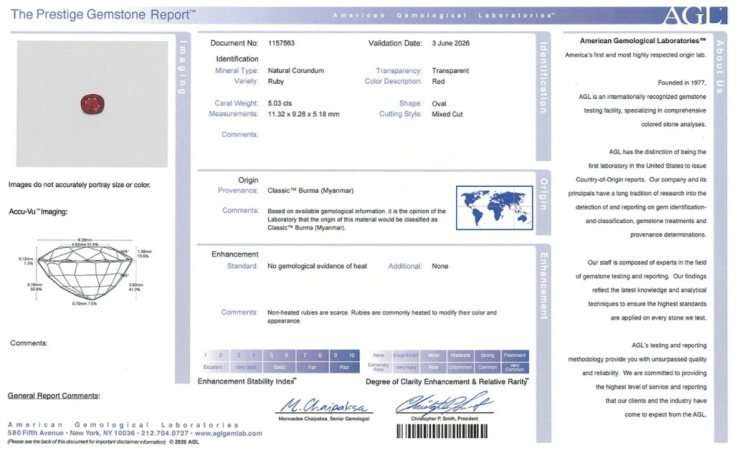
This stone was graded by AGL last month as a 5.03 "Classic" Burma ruby. There was no evidence of heat or clarity enhancement.
Although we have learned to be very skeptical of auction houses photography, the ruby looks pretty red in most of the photographs we have seen of the stone. In the old days, you would have to deal with photoshopped auction images. Now it's AI. We recommend always seeing the stone first at pre-auction before bidding on these expensive stones.
30.61 Mozambique Paraiba-Type Tourmaline
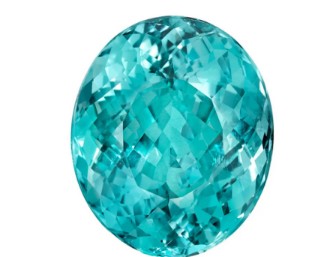 |
| 30.61 Mozambique Paraiba-Type Tourmaline Courtesy: Bonhams |
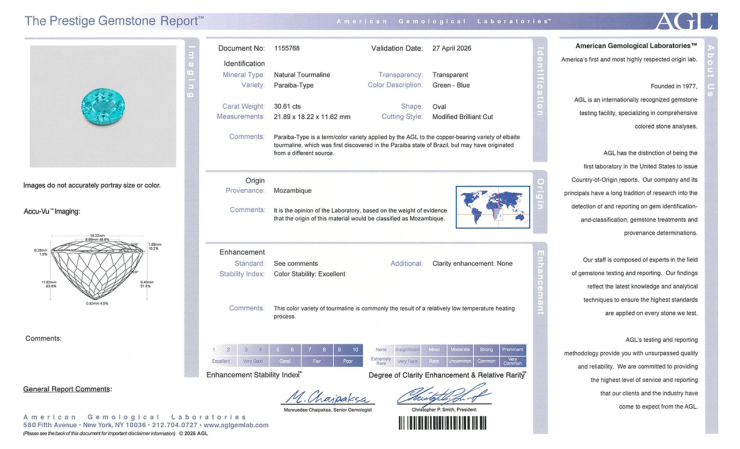
The other standout at Bonhams Exceptional Jewels was a 30.61 Mozambique Paraiba-type tourmaline. Yes, you read that right. A Mozambique Paraiba-type tourmaline sold for almost $50,000 per carat. It sold for more than nine times its pre-sale estimate of US$150,000-250,000. The Paraiba-type tourmaline went for US$1,452,000. Generally speaking, Brazilian Paraibas are considered the top stone by gem aficionados. Since there has been no supply for decades, the market seems to have finally accepted Mozambique Paraiba type tourmaline. As most know, Paraiba is a state in Brazil where these stones were first discovered in 1989. Should Mozambique call it's stones Paraiba, since they are not from there? Isn't it like calling African ruby Burma ruby? After years of fighting, the trade adopted "Paraiba-type" nomenclature.
As stated on the AGL Prestige Gem Report the color is Green-Blue. What that means is the colors are approximately 50% Green and 50% Blue. A beautiful color. I can see inclusions in the stone so it must be Moderately Included (MI). Like most Paraibas graded at AGL they state low heat and excellent color stability. According to AGL, the stone is Clarity Enhancement: None. As before, it is critical to know enhancement information before buying because Paraibas are often treated like emeralds.
7.08 Treated Colombian Emerald
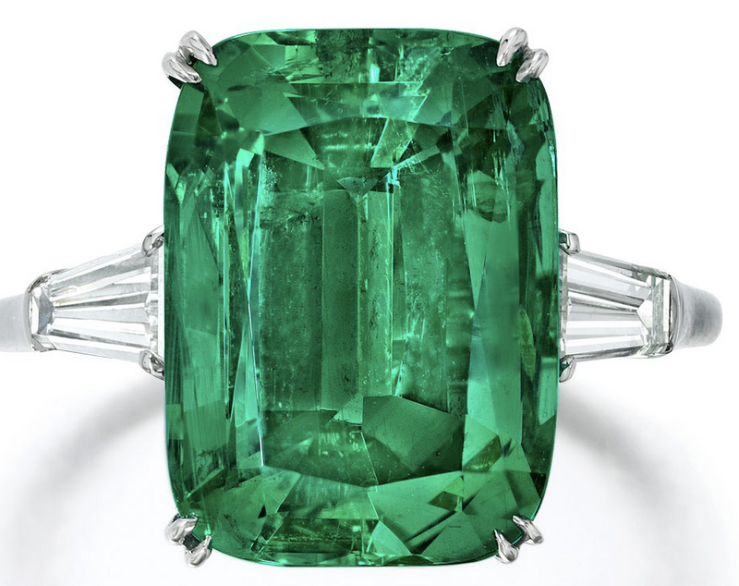 |
| 7.08 Treated Colombian Emerald Courtesy: Bonhams |
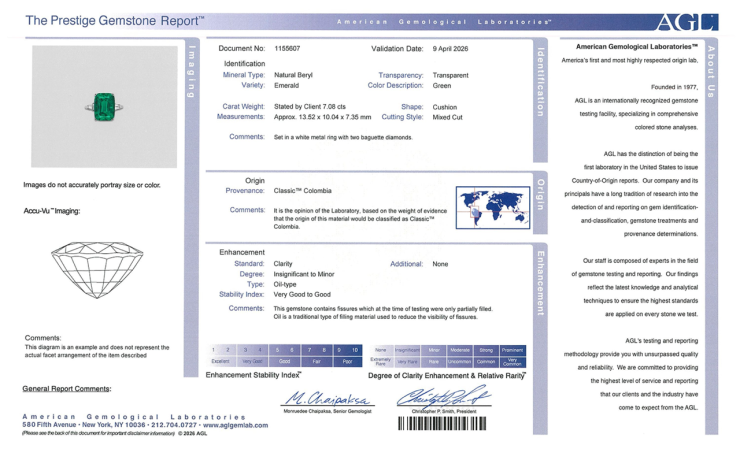
Finally at Bonhams, 7.08 treated Colombian emerald sold for $356,100 or slightly more than $50,000 per carat. It was mounted in a Harry Winston simple ring.
According to AGL, the stone is a Classic Colombian. We grade the stone Moderately Included Two (MI2) based upon the auction photo blown up. Of course, the real problem is the stone is filled with an oil type material. Of course, the filler is graded Very Good-Good-such fillers lack full stability. AGL also states the stone is treated: insignificant to minor clarity enhanced. We wonder if the emerald would drop in clarity to Heavily Included (HI), if the oil was reversed. Probably. We find these clarity treatment comments pro dealer because we believe 25-30% of all emeralds are heavily enhanced, 60-65% of all emeralds are moderately enhanced and 10-15% of all emeralds are lightly enhanced. In other words, 85-95% of all emerald are probably moderately or heavily enhanced. Seems like all the labs use these terms insignificant or minor enhancement to describe the emeralds they grade.
Coincidence? Dealer pressure? Guess the only way to know for sure is to acetone the stone for 24 hours and see what the stone really looks like In sum, we thought this stone is interesting because it shows what some jewelry buyers or collectors will pay for treated emeralds. Makes more sense to us to pay these numbers for treated emerald if the stone is LI, not MI. Be careful and verify enhancement details carefully.
3.68 Classic Colombian Emerald
 |
| 3.68 Classic Colombian Emerald Courtesy: Sotheby's |
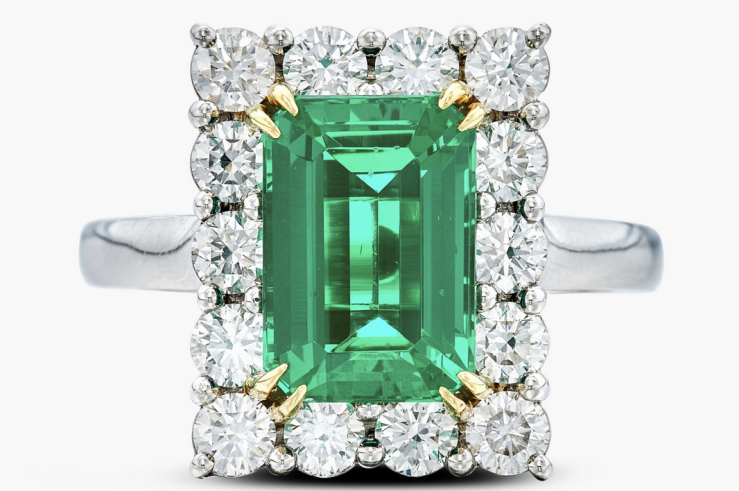
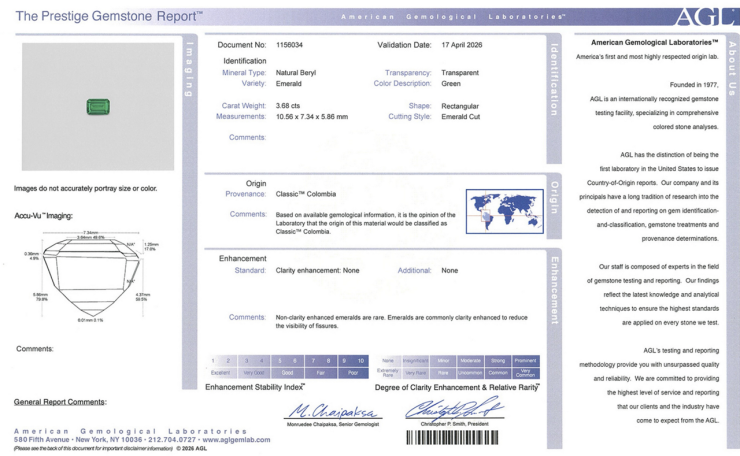
Although not the most expensive emerald sold, we find this stone to be almost perfect. At the same auction, a 10.64 Harry Winston emerald sold for $60,000 per carat. The stone had an AGL stating no clarity enhancement. However the inclusions were really obvious, probably an MI2.
We like this 3.68 better. The 3.68 looks like like a Chivor, Colombian stone to our eye, not the most green but definitely clean for an emerald. Many collectors will sacrifice color for clarity with emeralds. We look for emeralds like this-electric and poppy. The 3.68 reminds us of the stones we search for - top crystals that almost look fake. Thee stones are beyond ultra rare, especially in Lightly Included (LI) grades.
The 3.68 Colombian emerald was reserved at $60,000 to $80,000 total. Obviously way too low and under the current market. It sold for $326,700 or over $88,000 per carat. Obviously the new owners agreed this was a much better stone than the Harry Winston emerald with eye visible inclusions. We concur.
10.50 Classic Burma Sapphire
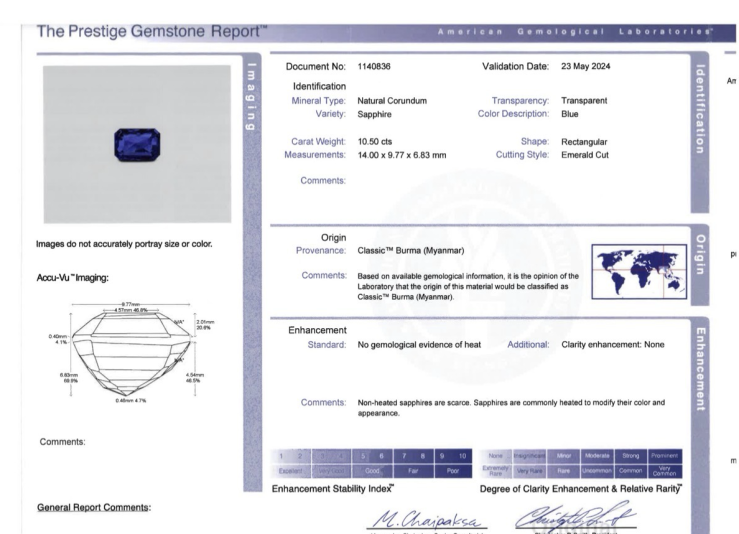
 |
| 10.50 Classic Burma Sapphire Courtesy: Sotheby's |
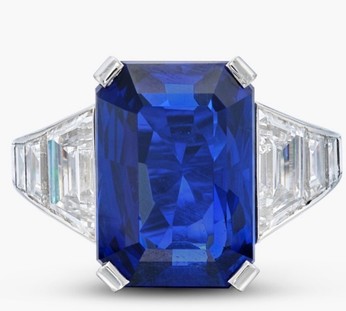
This 10.50 Classic emerald cut Burma Sapphire sold for $345,600 total, or about $33,000 per carat. The reserve was $200,000-$400,000, so the buyer got a good deal.
The stone was graded by AGL in 2024, stating the stone was not heated and not clarity enhanced. We would have preferred a new grading report to confirm no clarity enhancement, but the rock looks like a top quality gem, and clean from the available photographs.